
New website, same high quality peptides
Express postage on all orders
New website, same high quality peptides
Express postage on all orders
New website, same high quality peptides
New website, same high quality peptides
Express postage on all orders
New website, same high quality peptides
Express postage on all orders
New website, same high quality peptides

Peptides occupy a nuanced legal space in Australia. Many research peptides are legal to purchase and possess for laboratory and research purposes without a prescription. Others — particularly those listed as Schedule 4 substances under the Therapeutic Goods Administration’s Poisons Standard — are prescription-only medicines. The key factors are: which peptide you’re dealing with, what it’s being used for, and whether you are purchasing from a compliant domestic supplier.
This guide is intended for researchers, laboratory professionals, and informed individuals seeking clarity on the regulatory landscape. It is not legal advice. For specific legal questions, consult a qualified Australian lawyer.
Peptides in Australia are primarily regulated through the Therapeutic Goods Administration (TGA) under the Therapeutic Goods Act 1989. The TGA maintains the Poisons Standard (also called the Standard for the Uniform Scheduling of Medicines and Poisons, or SUSMP), which classifies medicines and chemicals into schedules based on their risk profile.
The most relevant schedules for peptides are:
The distinction is critical: the regulatory trigger is typically the intended use, not the peptide itself. A peptide sold for human therapeutic use without TGA registration is generally illegal. The same peptide sold strictly for research and laboratory use, without therapeutic claims, may be legally supplied domestically.
Growth hormone releasing peptides (GHRPs) and growth hormone secretagogues (GHS) are explicitly listed as Schedule 4 substances in the current Poisons Standard. This category includes:
These peptides can legally be prescribed by an authorised medical practitioner for legitimate therapeutic purposes. They cannot be legally supplied to individuals without a valid prescription.
Many other popular research peptides — including BPC-157, TB-500, GHK-Cu, Selank, and Semax — are not currently listed as scheduled substances in the Poisons Standard, meaning they may be sourced for research purposes without a prescription.
Semaglutide (the active ingredient in Ozempic and Wegovy) and Tirzepatide (active ingredient in Mounjaro) are TGA-registered therapeutic goods in Australia. As such, they are Schedule 4 prescription-only medicines and cannot be legally purchased without a valid prescription from a registered doctor.
Compounding pharmacies in Australia can legally prepare versions of these compounds for patients with a valid prescription. Purchasing them from unregulated domestic or overseas sources without a prescription is illegal.
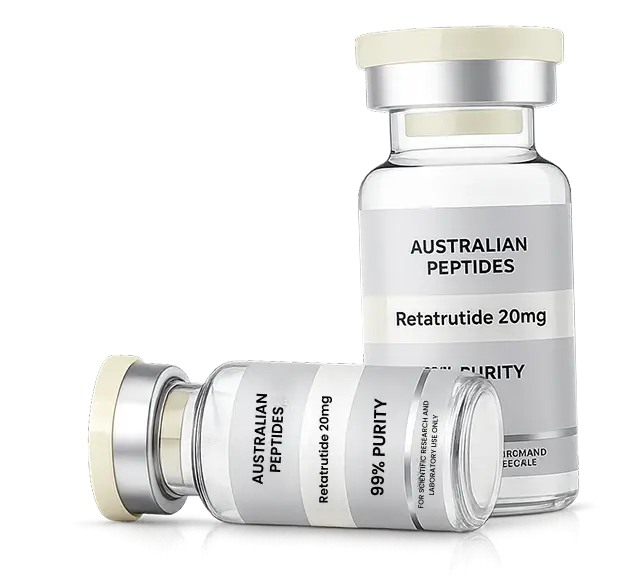
Retatrutide, a next-generation triple agonist weight loss compound, is not yet TGA-registered and remains in clinical trials internationally. Its regulatory status for research sourcing in Australia follows the same logic as other unscheduled peptides: research use may be permissible, but therapeutic claims cannot be made.
While the Poisons Standard provides a national framework, individual states and territories can implement stricter regulations. The ACT has historically taken a stricter approach — under the Medicines, Poisons and Therapeutic Goods Act 2008 (ACT), possession of Schedule 4 peptides without a prescription can result in significant penalties. Researchers operating in the ACT should take particular care.
South Australia’s Controlled Substances Act 1984 similarly creates offences for purchasing, selling, or using peptides without appropriate authorisation. Researchers across all jurisdictions should verify their local regulatory environment before purchasing research compounds.
For legitimate researchers purchasing peptides in Australia, staying compliant involves several practical steps:
Purchasing research peptides from a domestic Australian supplier is not only more convenient — it is legally cleaner. Domestic suppliers operating within Australia’s regulatory framework have already navigated the compliance landscape. Products are dispatched under Australian courier networks, avoiding Australian Border Force inspection entirely. For researchers who require reliable, timely access to high-purity compounds, this removes both legal uncertainty and supply chain risk.


Need more information about Australian Peptides? Get in contact with us via the email below and Australian Peptides will assist you promptly.
Include your name and a relevant subject line.
Subscribe now to keep reading and get access to the full archive.