
New website, same high quality peptides
Express postage on all orders
New website, same high quality peptides
Express postage on all orders
New website, same high quality peptides
New website, same high quality peptides
Express postage on all orders
New website, same high quality peptides
Express postage on all orders
New website, same high quality peptides
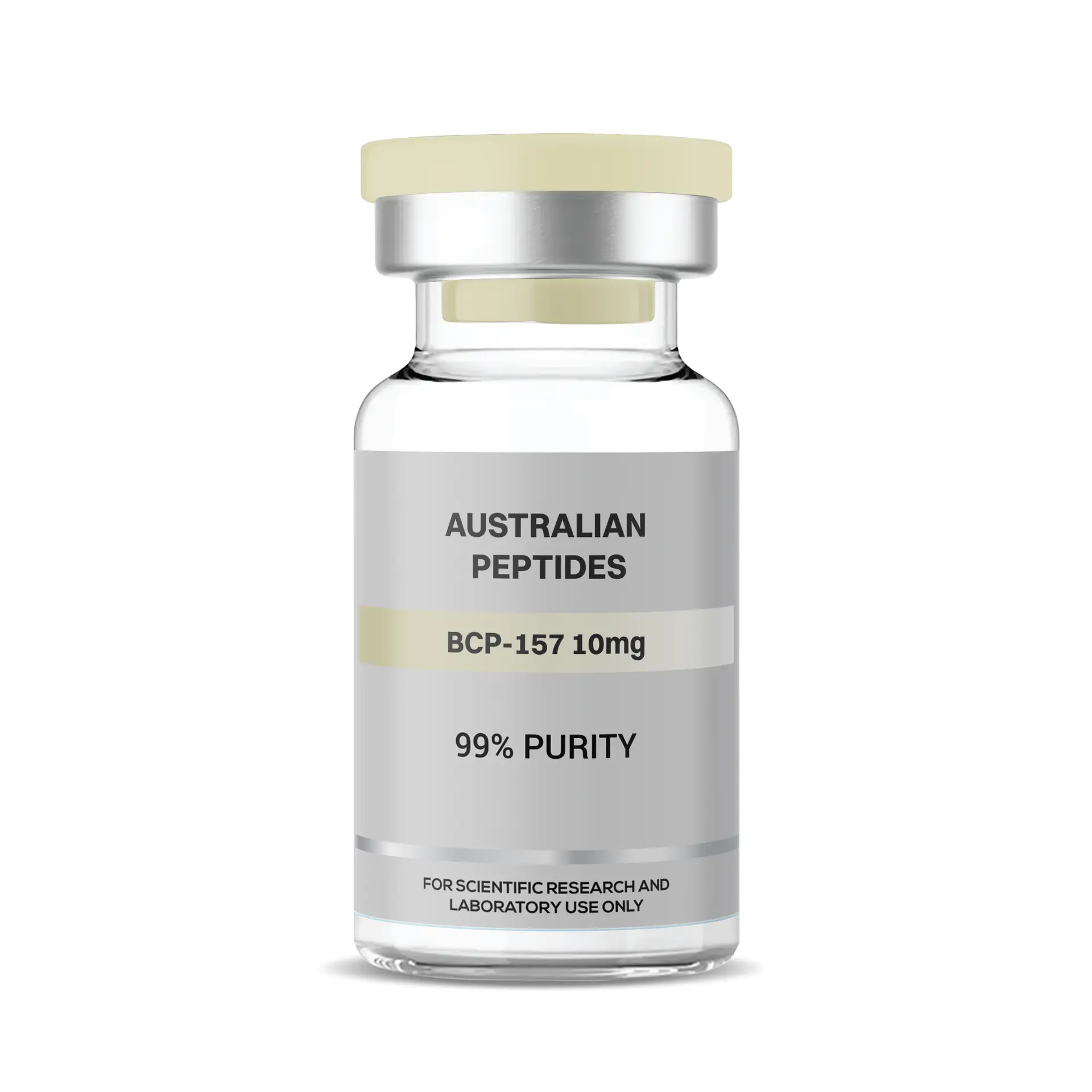
BPC-157 (Body Protection Compound‑157) is a synthetic fragment of a protein found in gastric juice, designed as a short peptide with 15 amino acids. Lab and animal studies suggest it may influence blood flow, new blood vessel formation, inflammation, and collagen production, all of which are relevant to tissue repair. Because of this, it’s often promoted online as a “Wolverine compound” for gut issues, tendon and ligament injuries, and general recovery support.
In Australia, it’s typically sold as a lyophilised (freeze‑dried) powder, sometimes claimed to be very high purity and “for research use only,” or compounded into prescription products by certain pharmacies. These labels are important: they signal that it is not a standard, fully established medicine but an experimental substance with incomplete safety and efficacy data in humans.
As of early 2026, BPC‑157 is commonly treated as a prescription‑only substance in Australia, meaning a doctor’s script is generally required to obtain it legitimately through medical channels. At the same time, it’s easy to find Australian‑based peptide retailers and clinics advertising BPC‑157 online with “research use only” disclaimers, or offering access via telehealth consults with registered doctors who then arrange compounding through local pharmacies.
This creates a confusing picture for consumers: it can feel “legit” because an Australian clinic and pharmacy are involved, yet the product itself remains experimental and sits outside what people usually think of as mainstream, proven treatment. For the average person in Melbourne or anywhere else in Australia, that makes it hard to know who to trust, what’s safe, and what’s just clever marketing.
For athletes, one point is clearer: BPC‑157 is banned by the World Anti‑Doping Agency (WADA) as a non‑approved substance and is prohibited at all times, in and out of competition. Australian anti‑doping bodies follow WADA’s list, so using BPC‑157 can lead to a positive test and sanctions, even if you obtained it through a prescription or a slick‑looking “wellness” clinic.
The preclinical science around BPC‑157 is genuinely intriguing, especially in the context of regenerative medicine and tissue healing. Rodent studies indicate possible benefits for tendon and ligament repair, gut lining protection, and improved healing under certain experimental conditions. However, these findings come from animal models and lab experiments with limited direct translation to everyday human therapy.
The big gap in early 2026 is still human data. There is a shortage of robust, large‑scale human clinical trials that show BPC‑157 is both effective and safe for specific conditions people actually care about, like chronic tendon pain, long‑standing gut issues, or post‑surgery recovery. This evidence gap is why many cautious doctors remain hesitant, and why some Australian clinicians and chiropractors who do talk about BPC‑157 publicly often emphasise that it is experimental and not a magic bullet.
If you’re reading this in February 2026, that’s the key takeaway: BPC‑157 is still an experimental peptide with unproven benefits and unknown long‑term risks in humans, regardless of how many reels, TikToks, or influencer posts suggest otherwise.
In practice, Australians are accessing BPC‑157 in three main ways in 2026:
For anyone considering BPC‑157 in Melbourne or elsewhere in Australia, it’s essential to differentiate between “available” and “well‑validated.” Just because a product is relatively easy to order online or obtain through a clinic does not mean it is recognised as safe, effective, or standard of care.
Because BPC‑157 is unapproved in the traditional sense and largely studied in animals, its safety profile in humans is still unclear. Concerns raised by clinicians include unknown long‑term effects, potential off‑target actions, possible contamination in non‑regulated products, and uncertain interactions with medications or supplements. The more casual the supply chain (for example, “research only” vials bought on impulse), the higher the risk that you’re getting something mislabeled, under‑dosed, or contaminated.
If you are in Australia and thinking about BPC‑157 in February 2026, here are practical questions to discuss with a qualified health professional:
In 2026, Australia sits at a crossroads with BPC‑157: the peptide is more visible than ever, clinics and online vendors are building business models around it, and yet the evidence base is still catching up. The most responsible stance for now is cautious curiosity—stay informed, seek independent medical advice, and resist the pressure to self‑experiment just because a peptide happens to be trending this month.


Need more information about Australian Peptides? Get in contact with us via the email below and Australian Peptides will assist you promptly.
Include your name and a relevant subject line.
Subscribe now to keep reading and get access to the full archive.