
New website, same high quality peptides
Express postage on all orders
New website, same high quality peptides
Express postage on all orders
New website, same high quality peptides
New website, same high quality peptides
Express postage on all orders
New website, same high quality peptides
Express postage on all orders
New website, same high quality peptides

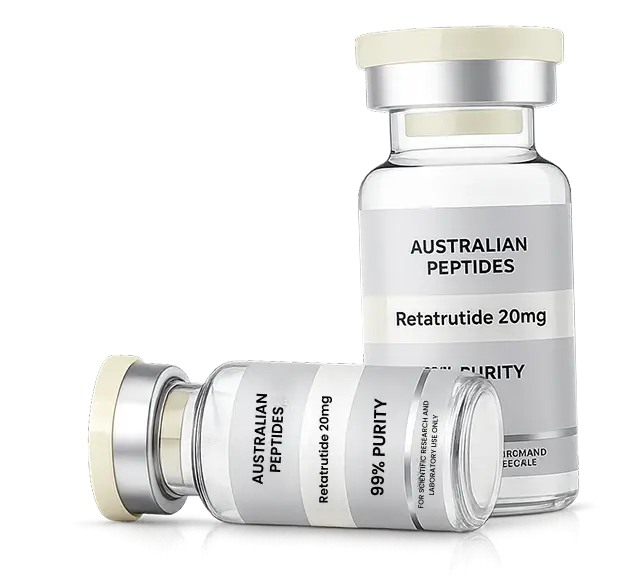
Retatrutide is a synthetic peptide developed by Eli Lilly that simultaneously activates three metabolic receptors: GLP-1 (Glucagon-Like Peptide-1), GIP (Glucose-dependent Insulinotropic Polypeptide), and glucagon. This triple agonist mechanism distinguishes it from all currently approved weight loss peptides — Semaglutide is a single GLP-1 agonist, and Tirzepatide is a dual GLP-1/GIP agonist. Retatrutide adds glucagon receptor activation on top of both.
It is currently in Phase 3 clinical trials and is not yet approved by any major regulatory authority, including the TGA. In Australia, it is not TGA-registered and therefore cannot be legally supplied for therapeutic use. For research purposes, it is available domestically as an unscheduled compound, provided suppliers maintain research-use-only positioning.
To understand why Retatrutide is generating such extraordinary research interest, it helps to understand what each receptor does in the context of metabolic regulation.
GLP-1 receptor activation slows gastric emptying, reduces appetite by acting on the brain’s satiety centres, and stimulates insulin secretion in a glucose-dependent manner. This is the mechanism shared by Semaglutide and Tirzepatide.
GIP receptor activation enhances the GLP-1 insulin response and appears to have additive effects on appetite suppression. Tirzepatide’s superior weight loss outcomes compared to Semaglutide are largely attributed to this dual mechanism.
Glucagon receptor activation is the novel addition in Retatrutide. Glucagon stimulates the liver to produce glucose (glycogenolysis) and promotes fat burning (lipolysis). In isolation, glucagon activation would raise blood sugar — problematic for metabolic disease research. But in the presence of GLP-1 and GIP receptor co-activation, the insulin-stimulating effects balance the glucagon-driven glucose output, while the fat-burning and thermogenic effects of glucagon remain active. The net result in research models has been dramatically enhanced energy expenditure on top of the appetite suppression seen with GLP-1 agonism alone.
Phase 2 trial results published in 2023 documented average weight reductions in the highest-dose Retatrutide group that exceeded anything previously reported in a pharmaceutical trial — participants in the highest dose cohort achieved average body weight reductions of approximately 24% over 48 weeks. These figures surpassed both the Semaglutide STEP trials and the Tirzepatide SURMOUNT trials.
Phase 3 trials are currently underway across multiple countries, investigating Retatrutide’s effects on obesity, type 2 diabetes, and cardiovascular outcomes. Results are expected to inform a regulatory submission to the FDA and potentially the TGA within the next several years.
Retatrutide’s unregistered status in Australia creates a specific research framing. It cannot be prescribed or supplied therapeutically. Researchers studying GLP-1-adjacent mechanisms, triple agonist pharmacology, or energy homeostasis pathways may legitimately seek access to research-grade Retatrutide for non-clinical research purposes.
Given the extraordinary Phase 2 data, the compound is attracting attention from a broad research community — not just those directly investigating obesity pharmacology, but researchers in metabolic syndrome, non-alcoholic fatty liver disease (NAFLD), and cardiovascular risk reduction who see the triple agonist mechanism as potentially relevant to their work.
As a relatively newer research compound, Retatrutide’s availability through research suppliers is more variable than for established peptides like BPC-157 or TB-500. Researchers should apply particularly rigorous quality standards:
Given the intense public and commercial interest in weight loss peptides, this category has attracted more low-quality suppliers than most. The combination of high demand and complex synthesis (Retatrutide is a longer, more structurally complex peptide than many research compounds) makes quality verification more important than ever.


Need more information about Australian Peptides? Get in contact with us via the email below and Australian Peptides will assist you promptly.
Include your name and a relevant subject line.
Subscribe now to keep reading and get access to the full archive.