
New website, same high quality peptides
Express postage on all orders
New website, same high quality peptides
Express postage on all orders
New website, same high quality peptides
New website, same high quality peptides
Express postage on all orders
New website, same high quality peptides
Express postage on all orders
New website, same high quality peptides

This guide covers what retatrutide is, how it works, and why it has attracted such significant research attention.
The Background
Retatrutide, also known by its development designation LY3437943, is a synthetic peptide developed by Eli Lilly as part of a broader research programme into multi-receptor metabolic compounds. It entered clinical investigation as a potential obesity and metabolic disease therapeutic, generating considerable attention in the research community as trial data emerged through 2023 and 2024.
For the research community, what makes retatrutide notable is its mechanism — specifically, the number of receptors it engages simultaneously.
Triple-Receptor Agonism: How Retatrutide Works
Most peptides in the GLP-1 class target a single receptor. Semaglutide, for example, is a GLP-1 receptor agonist. Tirzepatide represented a step forward as a dual agonist, targeting both GLP-1 and GIP receptors simultaneously. Retatrutide goes a step further still.
Retatrutide is a triple-receptor agonist, engaging three distinct receptors:
GLP-1 (Glucagon-Like Peptide-1 Receptor) GLP-1 receptor agonism is the foundation of the modern metabolic peptide class. GLP-1 is an incretin hormone released in response to food intake, involved in insulin secretion, appetite regulation, and gastric motility. GLP-1 receptor agonists have been among the most studied metabolic compounds of the past decade.
GIP (Glucose-Dependent Insulinotropic Peptide Receptor) GIP is the second incretin hormone. Historically overlooked compared to GLP-1, GIP receptor agonism has gained significant research attention following tirzepatide’s emergence. GIP receptors are expressed in adipose tissue as well as pancreatic cells, and GIP agonism is understood to complement GLP-1 activity in fat metabolism research contexts.
GCGR (Glucagon Receptor) This is what distinguishes retatrutide from its predecessors. Glucagon is typically understood as the counter-regulatory hormone to insulin — it raises blood glucose and stimulates energy expenditure. Glucagon receptor agonism in the context of a combined GLP-1/GIP compound is an area of active research, with investigators exploring how simultaneous engagement of all three receptors affects metabolic outcomes compared to dual or single agonism.
Why the Triple Mechanism Matters for Research
The addition of glucagon receptor agonism to a GLP-1/GIP compound creates a more complex pharmacological profile than earlier generation peptides. From a research perspective, this complexity is precisely what makes retatrutide interesting — it allows investigators to study how simultaneous modulation of three distinct but interrelated metabolic pathways affects outcomes in ways that single or dual agonists cannot replicate.
The published clinical data from retatrutide trials, which showed substantial effects on body weight and metabolic markers in human subjects, has further driven research interest in understanding the mechanisms underlying those outcomes.
Retatrutide in the Australian Research Context
Australian research institutions and independent researchers have shown strong interest in retatrutide since meaningful clinical data began emerging. Domestic availability has historically been a constraint — international sourcing introduced the delays and risks covered in detail elsewhere on this blog. Australian Peptides now stocks retatrutide domestically, with dispatch available within 24 hours across Australia.
Sourcing Retatrutide in Australia
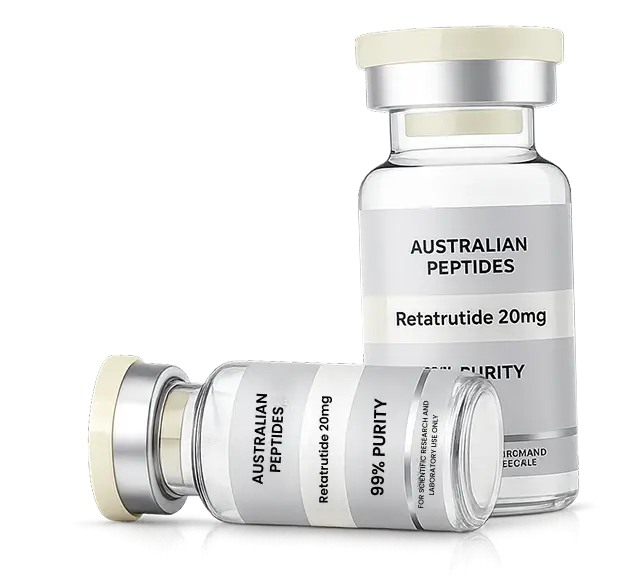
Retatrutide is available at Australian Peptides in research-grade format, supplied as lyophilised powder for reconstitution. Batch documentation is available on request. Current stock status and available sizes can be found on the Australian Peptides product page.
Shop now at australianpeptides.com


Need more information about Australian Peptides? Get in contact with us via the email below and Australian Peptides will assist you promptly.
Include your name and a relevant subject line.
Subscribe now to keep reading and get access to the full archive.