

In recent years, peptides have become one of the most talked-about compounds in the health, fitness and research world. Unfortunately, as interest has grown, so has the number of websites trying to take advantage of unsuspecting customers. Many Australians have fallen victim to peptide scams — losing money, receiving counterfeit products, or getting nothing at all.
This page is a practical guide to telling a real Australian supplier from a fake one. It covers what the scam actually looks like in this market, a five-minute check anyone can run before paying, and what to do if you have already sent money.
Scammers often set up sleek, professional-looking websites that seem legitimate at first glance. They may use stolen branding, fake testimonials, or limited-time “discounts” to pressure people into quick purchases. Some even copy real business names or use similar web addresses to confuse buyers.
Three patterns come up again and again in the Australian peptide market.
The cheapest scam to run is a copy of somebody else’s shop. Product photos, descriptions and even the About page get lifted wholesale, then published on a domain that reads almost the same as the original — a hyphen added, a word pluralised, or a .net in place of a .com.au. Buyers who have seen the real site before recognise the layout and assume they are in the right place.
The tell is usually depth. A cloned site has a convincing front page and nothing behind it: policy pages that are one generic paragraph, a blog with two posts, no batch data, and a contact form that goes nowhere.
Peptide scams often lean on scarcity. A page announces that a sought-after compound has just landed, urges you to order before it sells out, and offers a price well under everyone else. There is no lot number, no test data, and no way to ask which batch you would be receiving. The urgency is doing the work that evidence should be doing.
A certificate of analysis is meant to be the proof. It is also easy to fake, because most buyers have never looked at one closely. The common tricks are a single certificate reused across every product and every batch, a PDF lifted from another company with the logo swapped, or an image of a certificate at a resolution too low to read the numbers.
A certificate that cannot be tied to the vial in your hand proves nothing. If you have not compared one before, our guide to how to read a certificate of analysis walks through what each section means.
You do not need specialist knowledge to screen a supplier. Five questions will separate almost every scam site from a real operator.
Ask which lot you would be sent, and whether the certificate covers that lot. A supplier running real testing produces a new certificate for each batch, and the lot number on the certificate matches the number printed on the vial. A supplier who cannot answer, or who sends the same PDF regardless of what you ordered, is not testing anything.
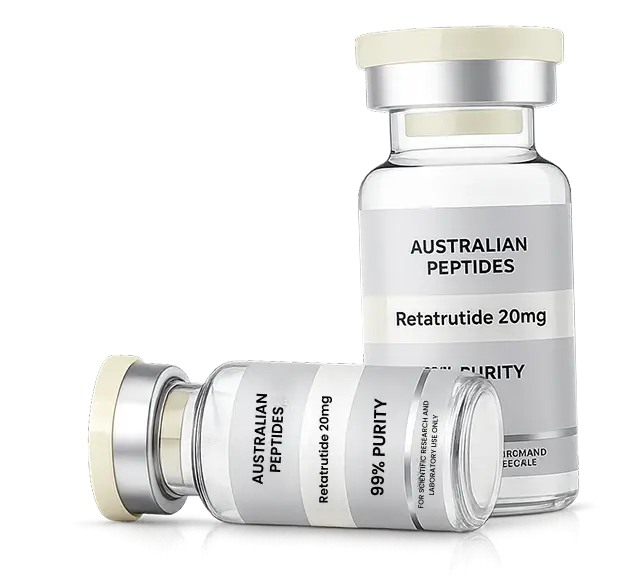
“99% pure” on its own is a claim, not a result. A real certificate names the analysis behind each figure. Identity should be confirmed by mass spectrometry, which measures the molecular weight of the material and compares it against the expected weight for that peptide sequence — this is the test that catches a substituted or mislabelled compound. Purity should come from high-performance liquid chromatography (HPLC), which separates the sample into its components and reports each as a percentage.
If a certificate gives you a number with no method, no instrument trace and no date, treat it as decoration.
Send a specific question before you order — something that requires a real answer rather than a template, such as which lot is currently shipping. A legitimate supplier answers within a day or two and answers the question you asked. Scam sites either never reply or send back generic marketing copy.
Check too whether the business has a history you can see: a domain that has been live for a while, a consistent presence across the places customers leave reviews, and staff who respond to criticism as well as praise. Scammers usually disappear quickly. Legitimate operators do not.
Payment is where the clearest signals live, though the rule is more specific than “cards good, transfers bad”. Plenty of legitimate small Australian businesses accept direct bank transfer — into a business account, quoted on the invoice, with your order number as the reference, and with the account details identical every time you order.
What should stop you is a transfer into a personal account, an account name that does not match the business, details that change between orders, or a push toward cryptocurrency and gift cards. Be equally wary of a site that takes your card at checkout and then emails asking you to pay another way instead — that switch is the scam, not the method.
Whatever the method, keep the receipt and the reference. If you pay by card you also keep the option of a chargeback, which is worth knowing when you are ordering from a supplier for the first time.
Look for the unglamorous pages: a real shipping policy with dispatch times and a carrier, a returns and refunds policy that describes actual conditions, and a way to track an order after it ships. These pages cost a scammer effort and earn them nothing, so they are usually missing, copied from another site, or a single vague sentence.
Act quickly — the first hours matter more than anything else you do.
Keep everything: the order confirmation, the URL, screenshots of the product page, and any messages. Reports with evidence attached are the ones that lead somewhere.
It would be easy to end a page like this with a claim of trustworthiness and nothing to back it. Here is how we answer the five questions above, with links so you can check rather than take our word for it.
We have been trading for over two years and dispatch from within Australia. If any of the above stops being true, the pages above are where you would notice first.
The position depends on the compound and on what it is being supplied for, and it is more nuanced than most sites admit. We cover it separately in what the law actually says about peptides in Australia.
Check that it names the batch, names the testing methods, carries a date, and is legible at full resolution — then check the lot number against the vial you received. Our guide to how to read a certificate of analysis goes through this line by line.
No. Price differences are real, and an established supplier is not automatically the cheapest. The warning sign is a price far below the market combined with missing batch data, an unusual payment method, or no way to reach anyone. Price alone tells you little; price plus missing evidence tells you a lot.
Reviews are worth reading, but check where they live. Reviews hosted only on the seller’s own site can be written by anyone. Look for a profile on an independent review platform, with a history that goes back further than a few weeks and includes the occasional complaint and a reply to it.
The peptide market in Australia is expanding — and so are the scams. Awareness is your best defence. Before you click buy, run the five checks above: batch-matched certificates, named testing methods, a supplier who answers questions, a normal payment path, and real shipping and returns pages.
If you are working out where to start, our guide to choosing a research peptide supplier covers what to compare, and our catalogue lists what we currently hold with the certificates attached.
New batch COAs and restock alerts, sent when they happen.


Need more information about Australian Peptides? Get in contact with us via the email below and Australian Peptides will assist you promptly.
Include your name and a relevant subject line.
Every batch we publish a third-party certificate of analysis. Get told when a new one lands, and when a sold-out peptide is back.
Subscribe now to keep reading and get access to the full archive.