R3TA 10mg — buy two, get one free Code: R3TA3
Click hereEvery lot we sell is tested by an independent laboratory before it is released. This page explains what that testing covers, how to read the results, and how to obtain the report for the specific lot you have received.
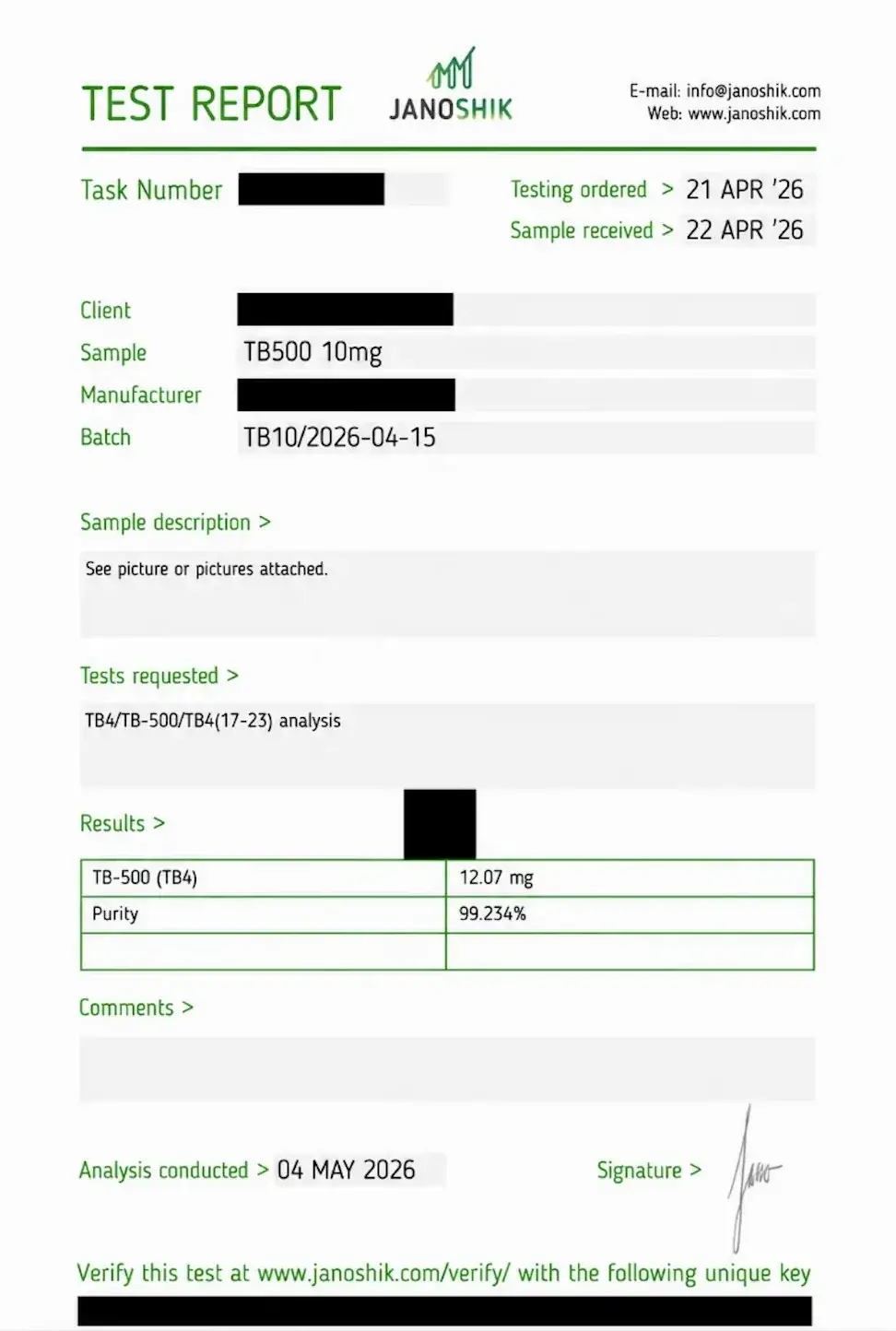
Current batch documentation for every product we sell. All 8 certificates are published below, issued by Janoshik and Kovera Labs.

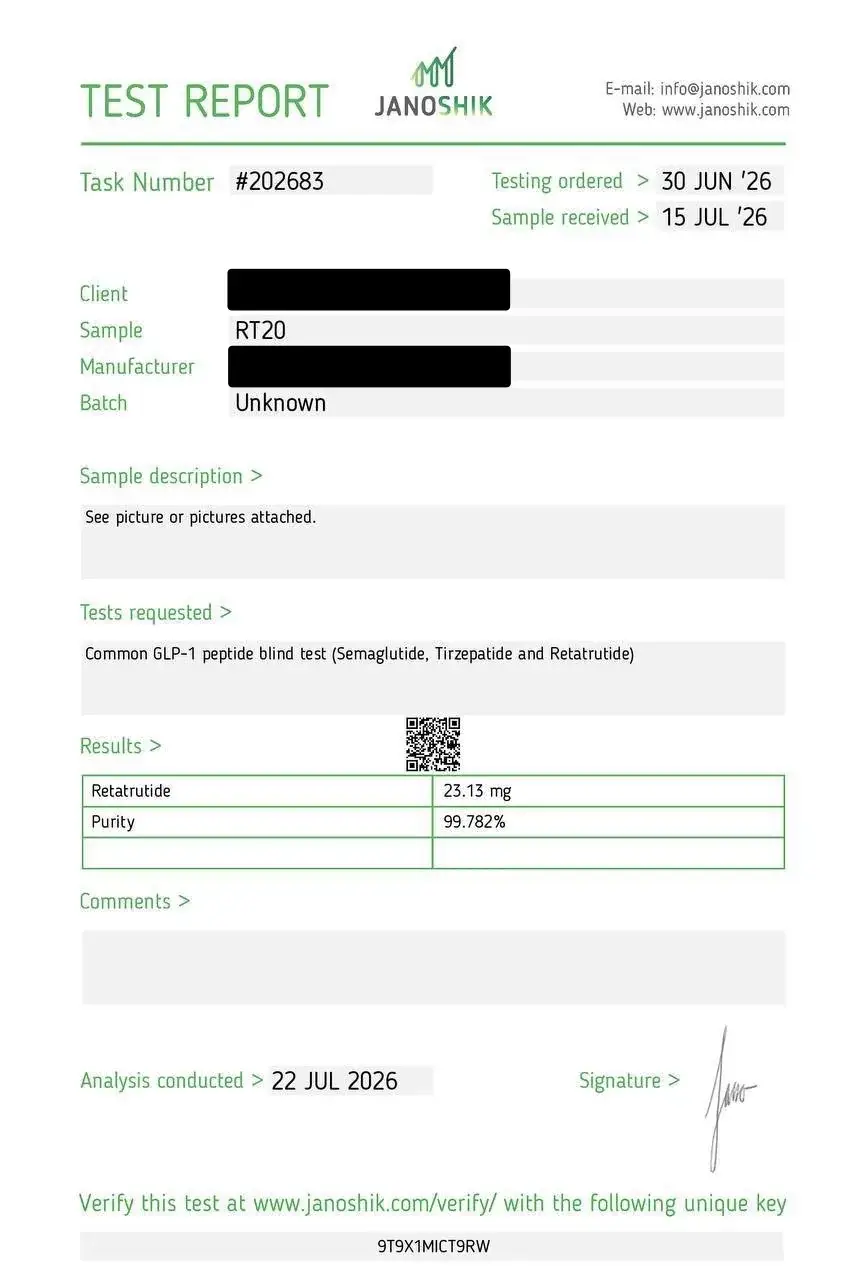
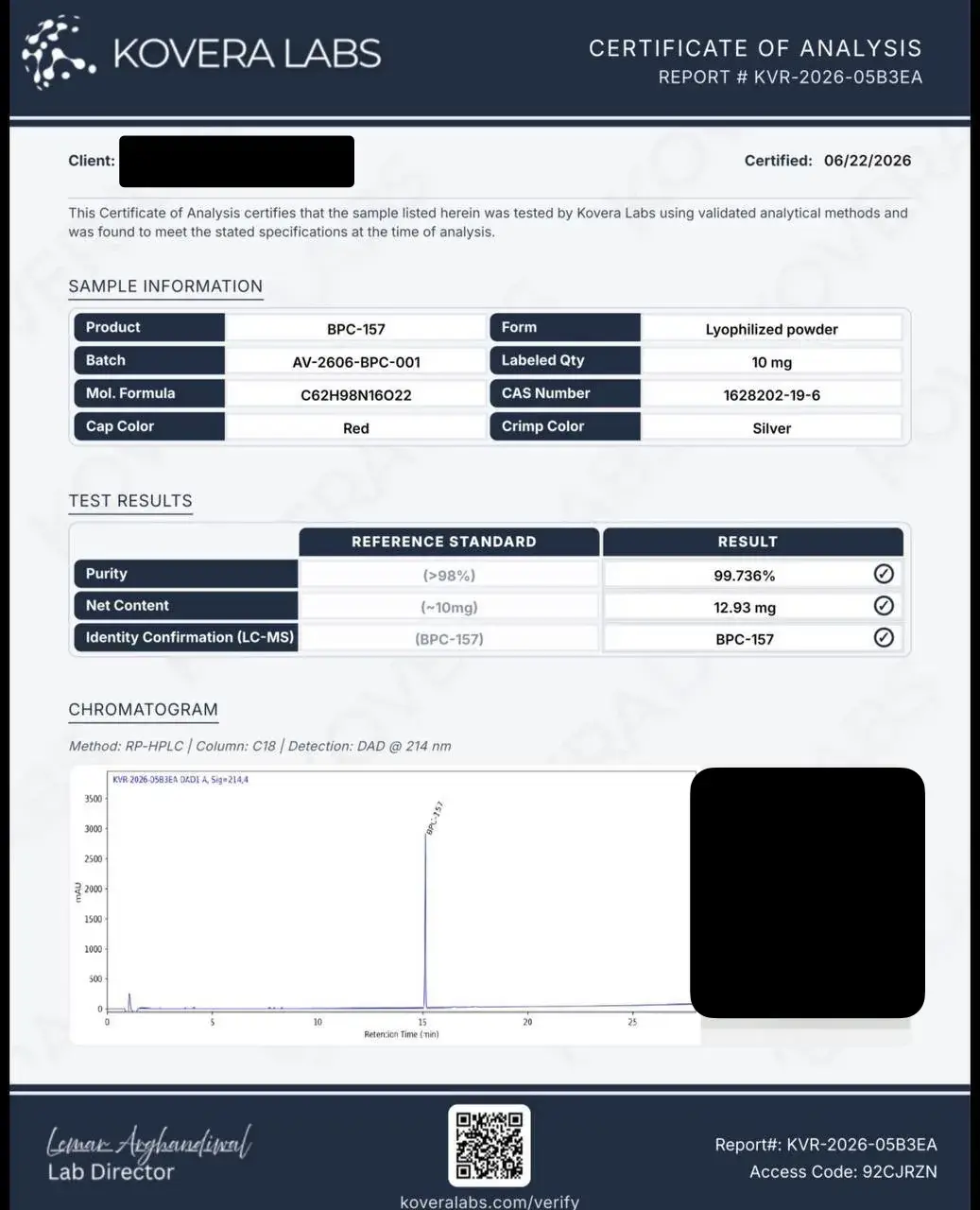
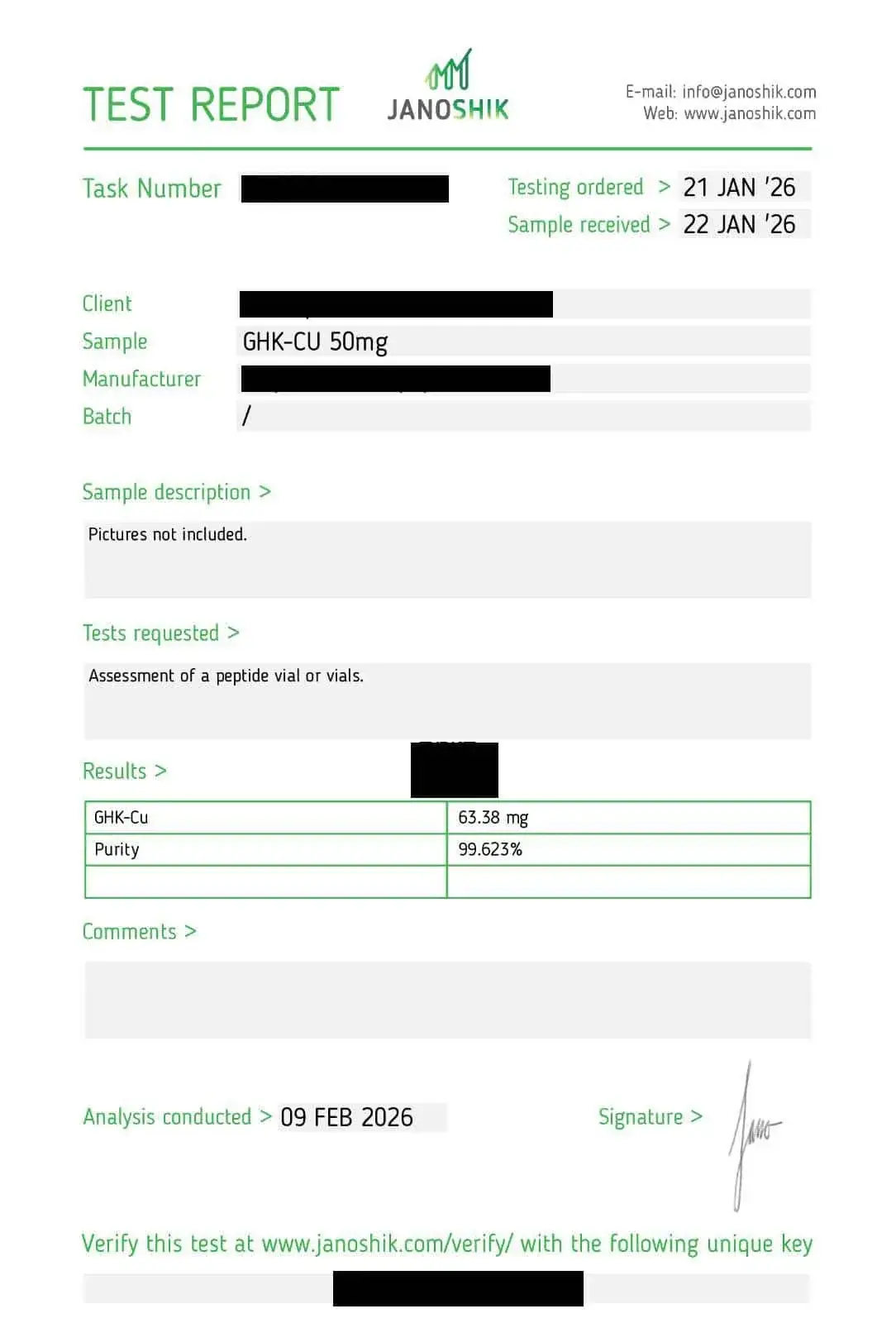
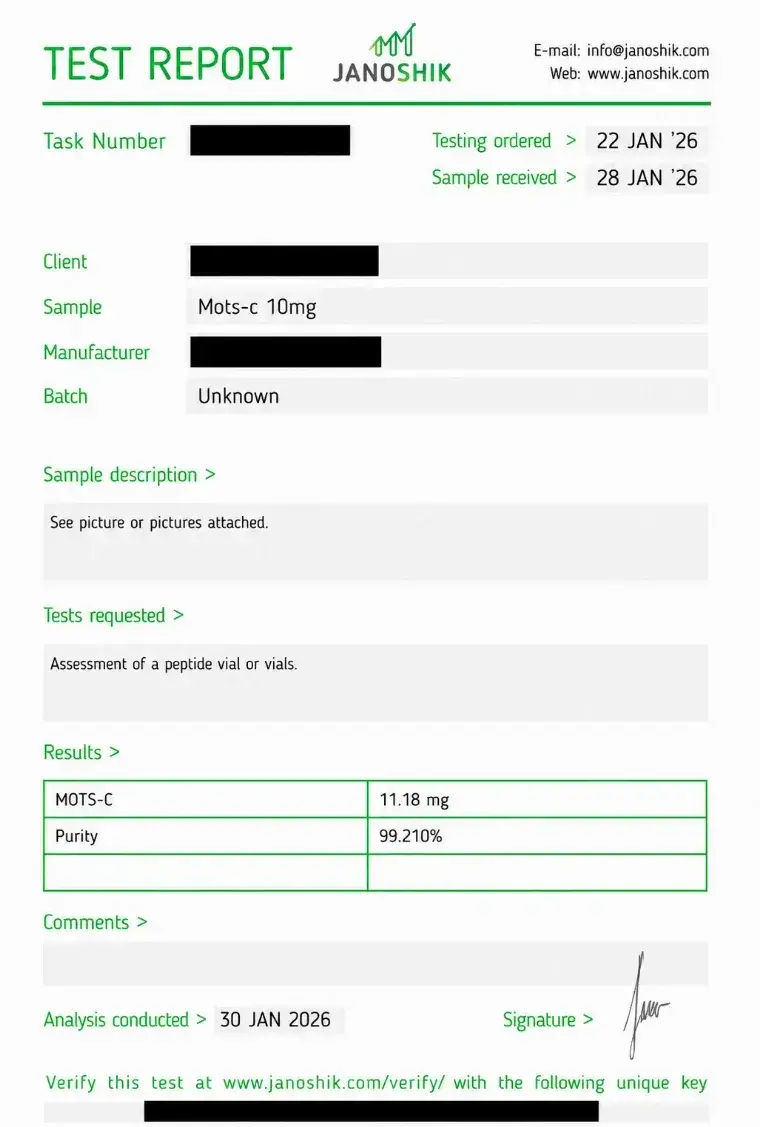


Two separate analyses are run on each lot, because they answer two different questions.
Mass spectrometry measures the molecular weight of the material and compares it against the expected weight for the peptide sequence. A match confirms the vial contains what the label says. This is the test that distinguishes a correctly supplied peptide from a substituted or mislabelled one, and it is the more important of the two.
High-performance liquid chromatography (HPLC) separates the sample into its components and reports each as a percentage of the total. Our specification is 99% or greater. The remainder is typically residual solvent, water, counter-ions from synthesis, and truncated sequences left over from the manufacturing process.
A certificate of analysis is only as useful as your ability to check it. Four things are worth looking at on any COA, from any supplier.
Applying those four checks to any vendor, including us, is the most reliable way to judge whether testing claims are backed by testing. For a fuller walkthrough of each field on a lab report, see our guide to reading a peptide certificate of analysis.
A certificate of analysis, or COA, is the laboratory report covering one specific batch of material. For research peptides it records two things: identity, confirming the vial holds the compound named on the label, and purity, the percentage of the sample that is the target peptide. Every batch we sell is tested before release and the report is published on this page.
Yes. Testing is carried out by independent laboratories rather than in-house. The certificates on this page were issued by Janoshik and Kovera Labs, and each names the sample, the analysis date and the measured result.
Janoshik and Kovera Labs. Both publish verification keys on their own websites, so any certificate here can be checked against the issuing laboratory rather than taken on our word. Kovera Labs reports also include the RP-HPLC chromatogram alongside the reference standard and the measured result.
It means that in HPLC analysis, 99% or more of the detected material corresponded to the target peptide. It is a measure of composition, not of potency, sterility, or suitability for any particular use. Our specification is 99% or greater and every certificate published here meets it.
High-performance liquid chromatography separates a sample into its components and reports each as a percentage of the total. It is the standard method for measuring research peptide purity. The chromatogram, which is the trace showing the main peak and everything beside it, is what turns a quoted purity figure into a result you can check.
Mass spectrometry measures the molecular weight of the material and compares it against the expected weight for the peptide sequence. It answers the more important question: whether the vial contains the compound on the label rather than a substituted or mislabelled one.
Yes. Both R3TA 10mg and R3TA 20mg have certificates published above. They were analysed by Janoshik as a blind GLP-1 panel covering semaglutide, tirzepatide and retatrutide, which means the laboratory was not told what the sample was and identified it independently. Our guide to retatrutide in Australia covers the compound in more detail.
A blend has no single purity figure, so it is analysed per component. The certificates for GLOW 70mg and KLOW 80mg list the measured milligram content of each peptide in the vial, which is what tells you the ratio you actually received rather than the ratio on the label.
Testing is performed on a physical batch of material, not on a product line. Two lots of the same peptide are two separate manufacturing runs and are tested separately. A certificate that covers a product in general, rather than a lot specifically, is not describing anything that was actually measured.
Lots rotate as stock moves, so the certificate published here is the one covering current stock. If the lot printed on your vial differs, send us your order number or that lot number and we will return the report for it.
Yes. Every certificate is published on this page with no account or enquiry needed. You can open or download any of them before deciding to buy.
No. A certificate describes the identity and composition of the material and nothing further. All products sold here are supplied for laboratory research use only and are not for human or veterinary use.
Every batch we publish a third-party certificate of analysis. Get told when a new one lands, and when a sold-out peptide is back.